Release 2.3
BlazeMeter 2.3 was released on May 10, 2026.
Performance tests | Support for Playwright Tests
BlazeMeter now supports running Playwright tests as part of test execution workflows. This enables you to use existing tests written in TypeScript or JavaScript and based on Playwright in BlazeMeter and execute the tests without rewriting them in JMeter.
This capability is designed for customers who already use Playwright and want to leverage BlazeMeter for test execution, reporting, and scalability.
For more information, see Create Performance tests (Playwright).
Service Virtualization | Fault simulation
Network failures are among the hardest conditions to reproduce in a test environment. Without fault injection, teams ship code that has never been validated against any infrastructure failures it will inevitably face in production.
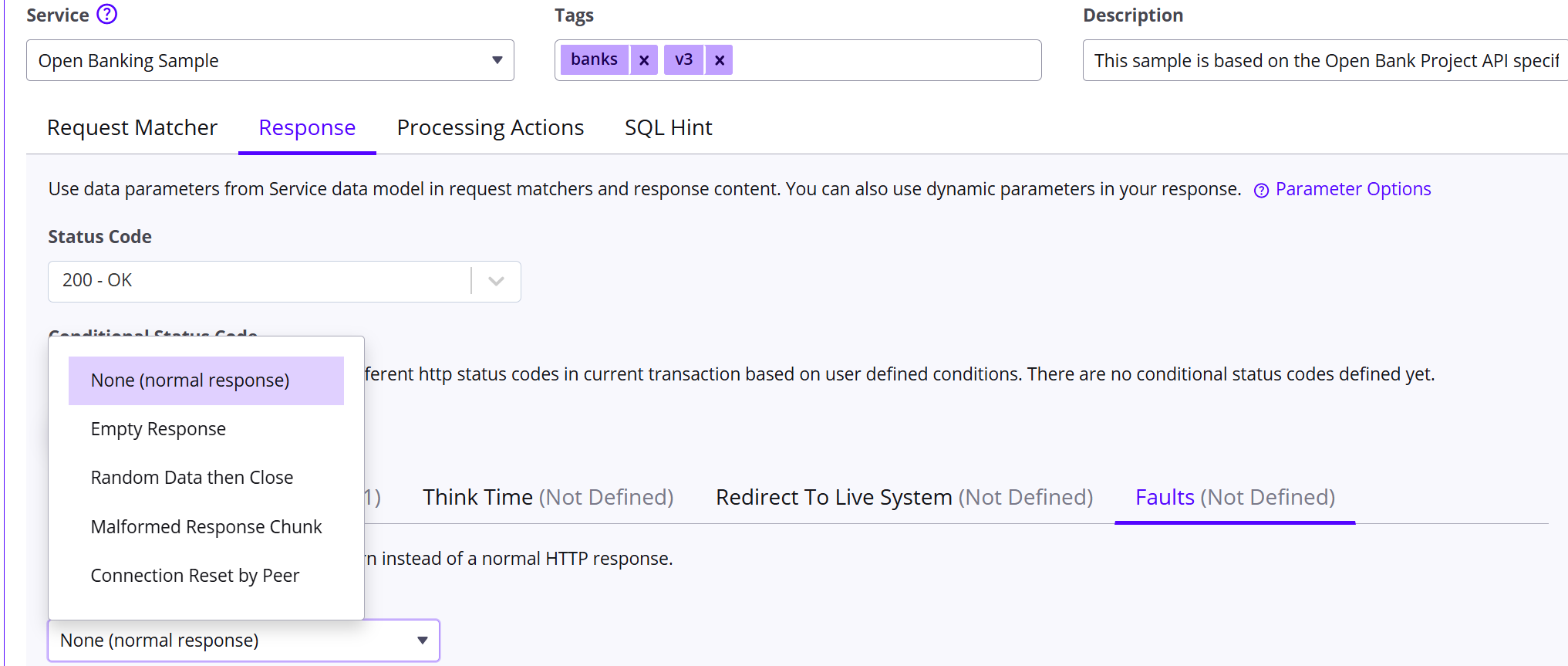
Virtual Service transactions can now be configured to return network-level faults instead of a normal HTTP response. Choose from: Empty Response, Random Data then Close, Malformed Response Chunk, or Connection Reset by Peer.
For more information, see Edit transactions.
Service Virtualization | Configure Rate Limits
Real-world APIs enforce quotas and throttling — but virtual services in BlazeMeter SV previously always responded at full speed, regardless of the production constraints they were meant to simulate.
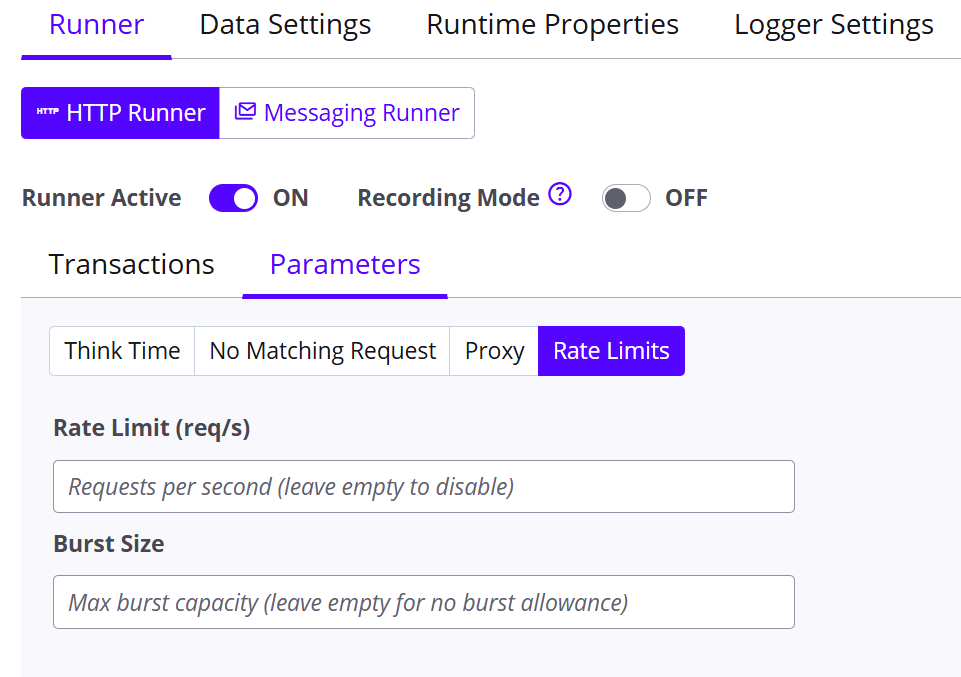
Rate Limiting for Virtual Services — You can now configure request-per-second rate limits on HTTP virtual services, with an optional burst size. When traffic exceeds the threshold, the virtual service returns HTTP 429 Too Many Requests, enabling accurate simulation of API throttling and quota enforcement.
For more information, see Create a virtual service.
Service Virtualization | Import from WireMock Cloud
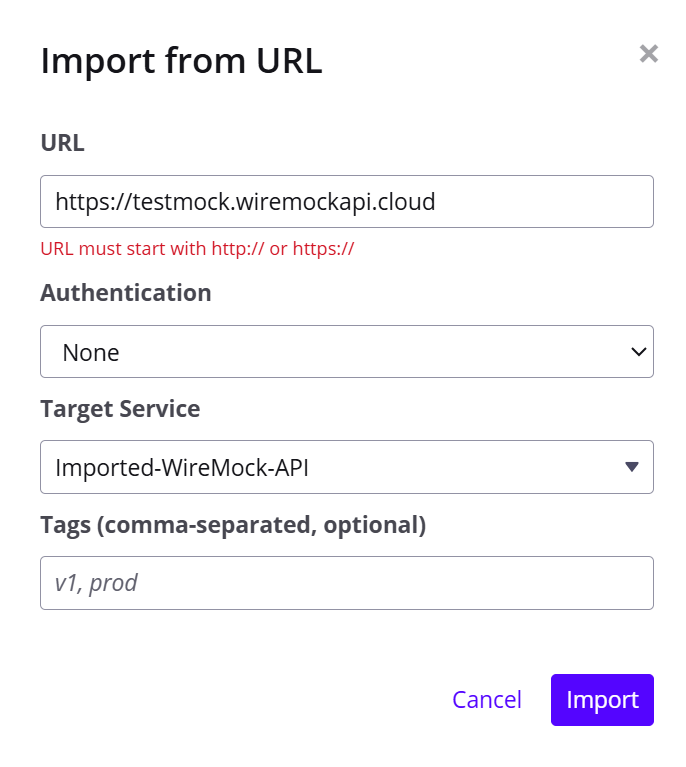
You can now import existing WireMock Cloud stubs directly into BlazeMeter Service Virtualization, eliminating the need to manually recreate transactions. This simplifies migration from WireMock and helps teams reuse existing mocks with minimal effort.
From Asset Catalog → Transactions, select Import from WireMock URL, then provide your WireMock Cloud Admin API endpoint and optional credentials (Basic Auth or API token). BlazeMeter Service Virtualization automatically retrieves and converts all stub mappings into virtual service transactions.
For more information, see Share transactions between virtual services and WireMock.
API Monitoring | WebSocket API testing and monitoring
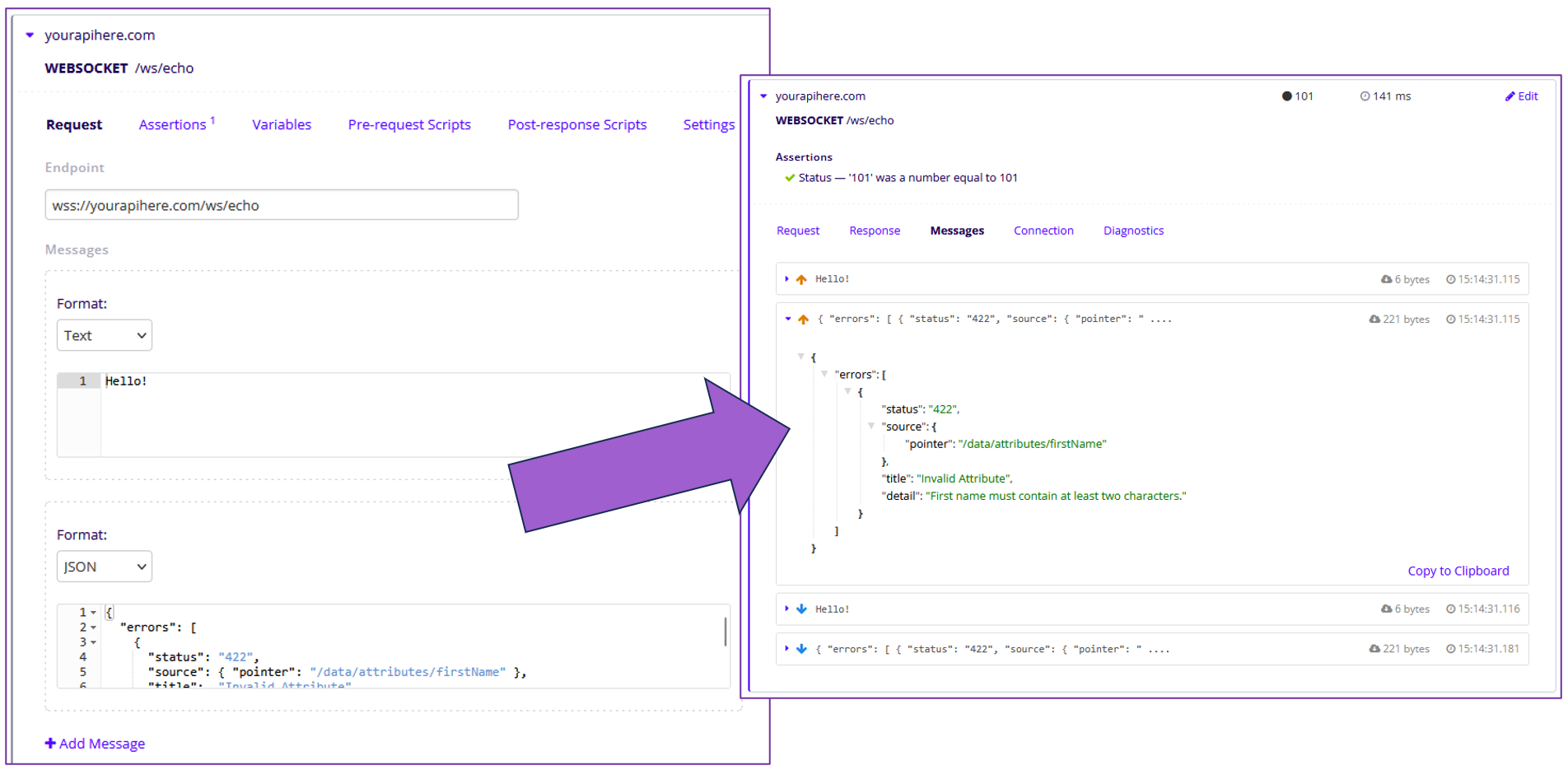
BlazeMeter API Monitoring now supports WebSocket endpoints. You can build, validate, and schedule WebSocket tests in the same workflow you already use for HTTP-based API tests.
What is available to you with WebSocket API testing and monitoring:
-
WebSocket steps in tests — Add WebSocket steps directly to any API Monitoring test. Each step opens a connection to a WebSocket endpoint and executes the interaction sequence you define.
-
Connection and payload validation — Assert on connection status and validate the content of incoming messages. Use the same assertion model as your existing HTTP steps: status checks, body assertions, variable extraction.
-
Ordered message sequences — Send multiple messages in a defined order and validate the server's responses at each stage. This lets you test stateful, real-time protocols where message order matters.
-
Scheduled health checks — Schedule WebSocket tests on a recurring basis alongside your existing API monitors. Catch connection failures and unexpected payload changes before your users do.
API Monitoring | Bucket creator information
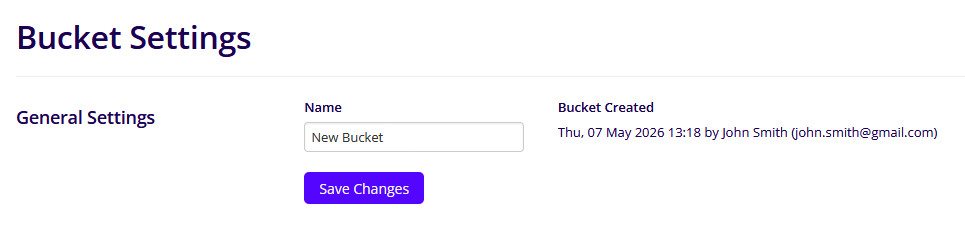
Bucket settings now display who created a bucket, bringing buckets in line with the existing creator information already shown for tests. For buckets created after release 2.3, the creator's name, email, and the date and time of creation are displayed. For buckets created before release 2.3, only the creation date is shown.
Taurus Cloud | fixed and removed vulnerabilities
The current version of Taurus Cloud (2.4.424-reduced) resolved several identified security vulnerabilities by applying the necessary fixes and removing affected components.
Following vulnerabilities are fixed / removed:
-
CVE-2025-12816 (high) node-forge
-
CVE-2025-66031 (high) node-forge
-
CVE-2026-26130 (high) asp.net-core
-
CVE-2026-26171 (high) system.security.cryptography.xml
-
CVE-2026-33116 (high) system.security.cryptography.xml
-
CVE-2026-33228 (critical) flatted
-
CVE-2026-33750 (high) brace-expansion
-
CVE-2026-33891 (high) node-forge
-
CVE-2026-33894 (high) node-forge
-
CVE-2026-33895 (high) node-forge
-
CVE-2026-33896 (high) node-forge
-
CVE-2026-33941 (high) handlebars