Create Performance tests (JMeter)
The most common use case for BlazeMeter is running automated, scalable performance tests against your web apps. BlazeMeter engines run on Taurus and support various open-source testing tools. Upload your own JMX script to run a JMeter test, or run a Gatling test by uploading a .scala file. The same goes for Selenium (Java, Ruby, or Python), K6, Playwright, and others. You can also add files that are distributed to every test engine.
Create AI-powered tests using Perforce Autonomous Testing
You can choose to continue test creation in a conversational interface: Perforce Autonomous Testing. Seamlessly manage your test suites, failure criteria, and results in one AI-powered workspace. Write your tests once in natural language and run them on all browsers, mobile devices, and operating systems, no script maintenance required. To learn more, see the Perforce Autonomous Testing section.
Create performance tests
Follow these steps:
- In the main menu, click the Performance tab.
- Click Create Test.
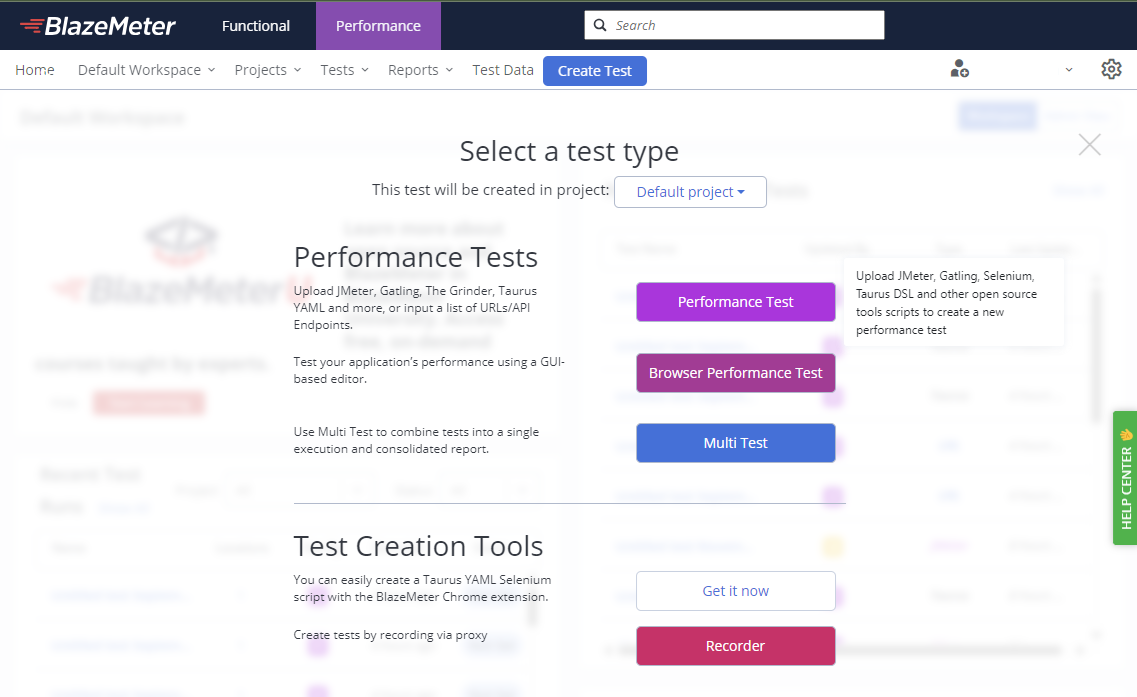
- Select a project.
- Click Performance Test.
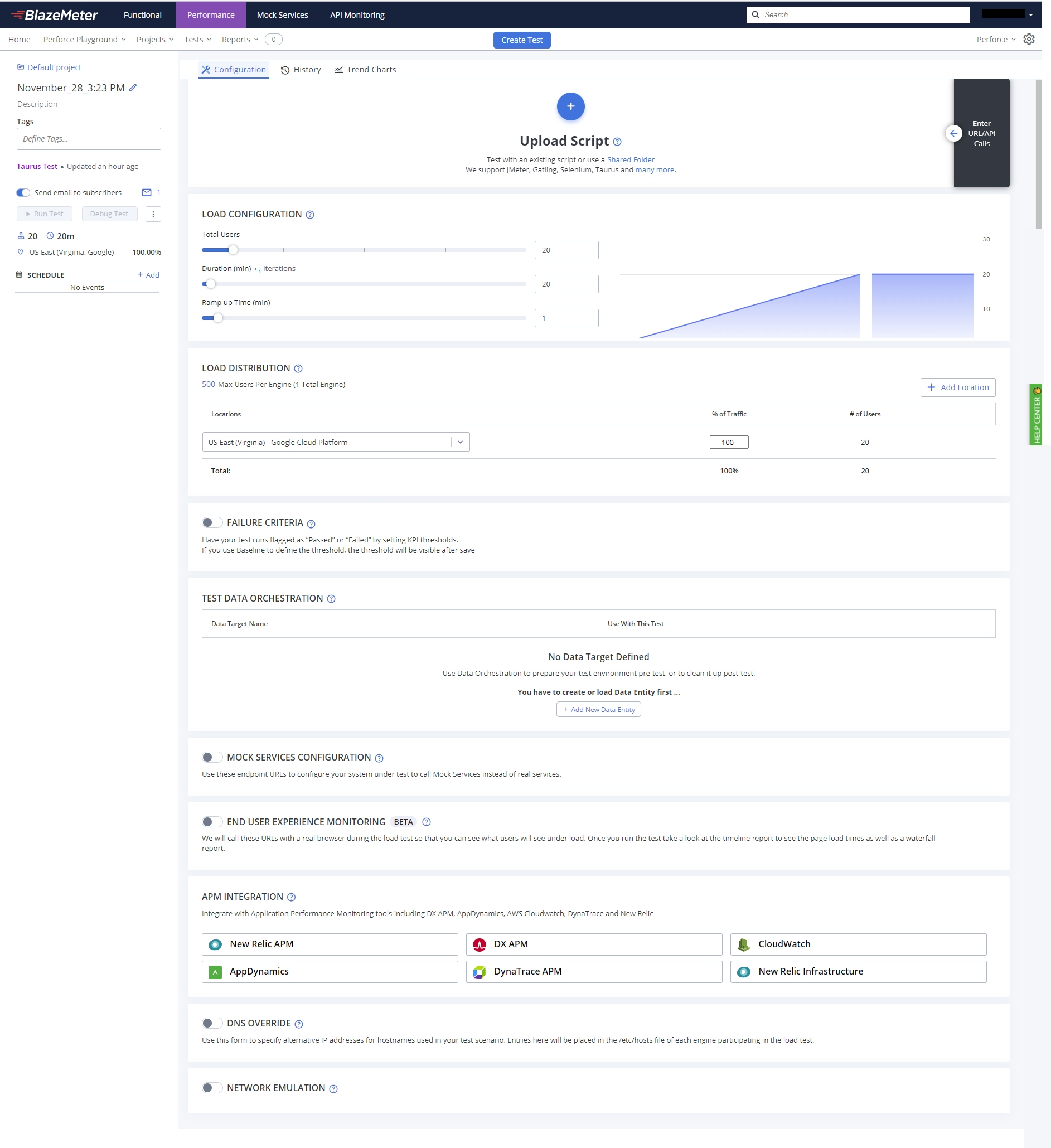
The Configuration tab for the test opens.
-
How you configure your test from here depends on what type of test you want to use. The options are:
- To upload a JMeter JMX script, see Creating a JMeter Test.
- To upload a Taurus YAML configuration file with your script, see Creating a Taurus Test.
- To create a Scriptless URL/API Performance test, see Creating a URL/API Performance Test.
- To upload a script without a YAML configuration file, fill out the configuration options in your test script.
Configure a test
How you configure your test from here depends on what type of test you want to use. The options are:
- If you uploaded a JMeter JMX script, see Creating a JMeter Test.
- If you uploaded a Taurus YAML configuration file with your script, see Creating a Taurus Test.
- If you want to create a Scriptless URL or API test, see Creating a URL/API Performance Test.
- If you uploaded a script without including a YAML configuration file, fill out the configuration options in your test.
Load testing best practices
To learn more about advanced performance test configuration options, see:
- Scenario definition
- Load configuration
- Load distribution
- Virtual Services configuration
- Failure criteria
- End user experience monitoring
- APM integration
- JMeter properties
- DNS override
- Network emulation
- Duplicate, delete or move a test
- Debug test: Low-scale test run, enhanced logging (NTC)
- Original test configuration report
- Reporting selectors for scenario and location